


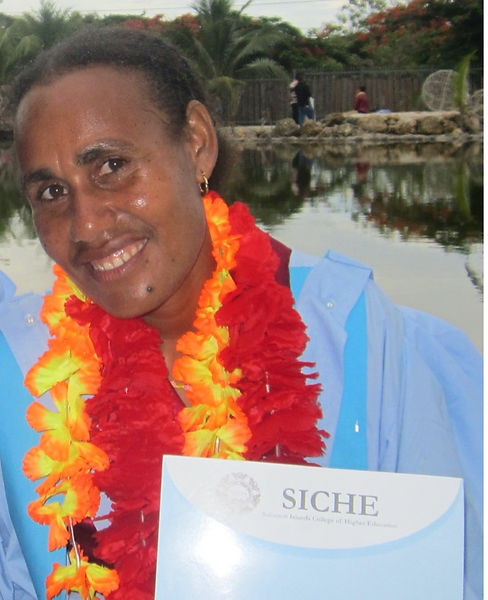
Esther Education Foundation is named in honour of Esther, a young girl in the Solomon Islands who faced significant adversity in accessing an education because of her gender.
Through incredible courage and perseverance, Esther overcame this adversity, and with the support of a number of scholarships, she was able to complete her secondary education and a Diploma in Teaching. Esther is now a passionate and successful teacher, and a leader in her community. Esther’s story is one of inspiration for other women and girls who face gender-related adversity.
It is well established that education is fundamental to breaking the poverty cycle and ending oppression.
The Esther Education Foundation aims to contribute to this agenda by raising funds to provide scholarships for women and girls in low-income (developing) countries who face gender-related discrimination to enable them access to education.
Whilst addressing gender inequity in education is a multi-faceted issue, one sure way of making a direct impact is through providing scholarships to women and girls in regions where gender-related issues otherwise inhibit access. Esther Education Foundation targets such locations through its focus on low income countries, where gender is significant in determining life outcomes.
We ask for your help to contribute to this cause and assist other young women and girls to achieve their educational aspirations.
Please donate today.
Educate a girl - Empower a nation!
Queen Rania of Jordan
Every girl that receives an education is more likely to make education a priority for her children. It’s a ripple effect of positive change in the community and country.
Tariq Al Gurg, CEO Dubai Cares
The United Nations GEM report (2018) reports that of the world's countries, only:
-
66% have achieved gender parity in access to primary education
-
45% have achieved gender parity in access to lower secondary education
-
25% have achieved gender parity in access to upper secondary education
Gender disparities in access to education are overwhelmingly associated with low-income (developing) countries.